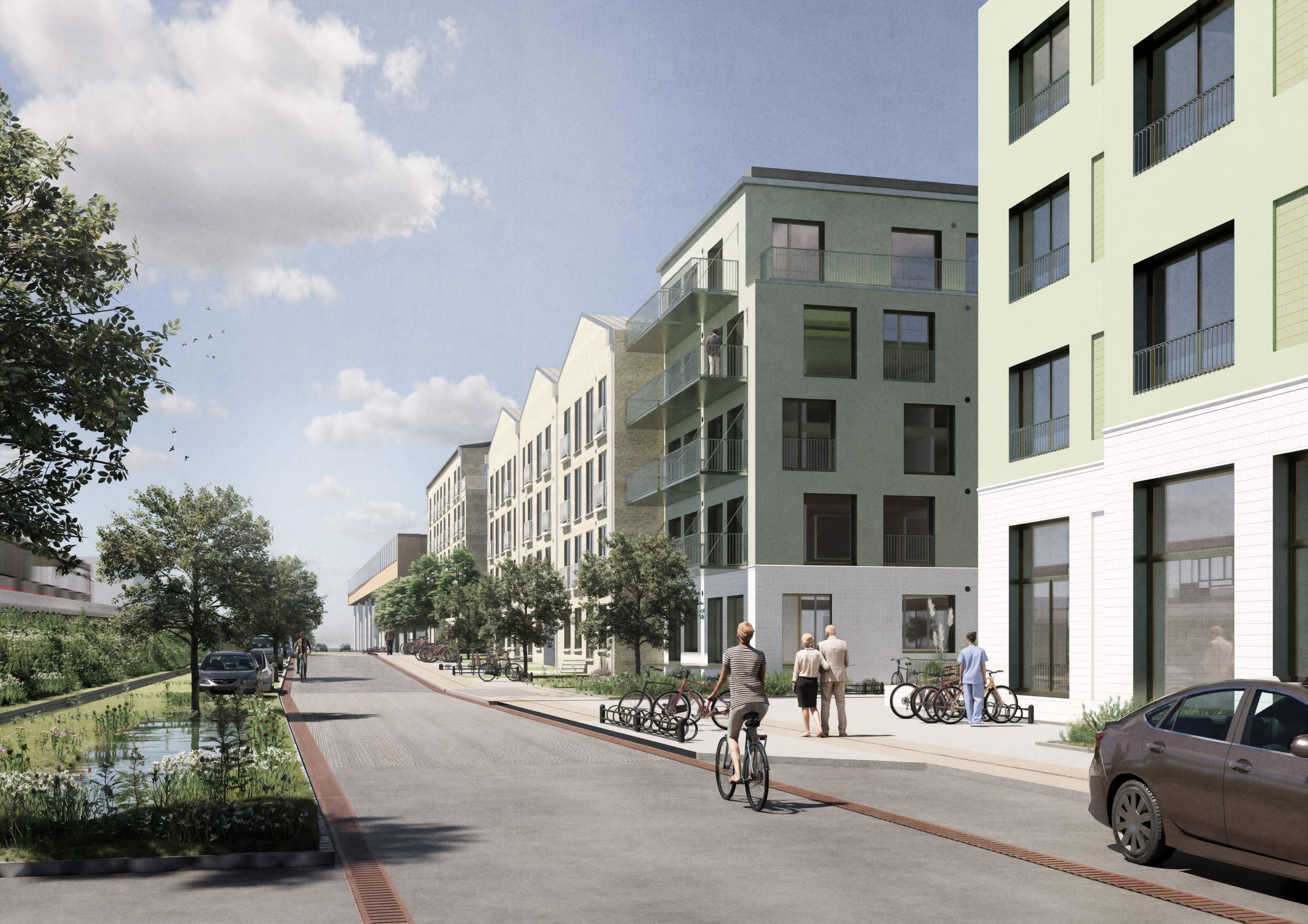
Over a number of years, the real estate company Balder has acquired the sites at Engvej 139A–149 and Jorisvej 11–21C, and in autumn 2025 a new local development plan for the area was approved. The plan includes the construction of apartments, townhouses and a public care home. The project is called Fortkvarteret, inspired by the nearby Kastrup Fort.
“We see great potential in this former industrial area, which has an ideal location close to nature, the city, shopping facilities and public transport. Our ambition is to develop a neighbourhood where we both introduce new buildings and take responsibility for the history already present on the site. That is why it has been important for us to carefully integrate the three listed buildings into the project and to reuse as many materials as possible,” says Flemming Joseph Jensen, CEO of Balder.
Today, the area appears abandoned, with graffiti, empty buildings and traces of its industrial past. These existing structures and materials form an important foundation for the development of the new neighbourhood.
Industrial heritage becomes part of the future
Since the 1950s, the area has been characterised by factories and workshops, which were gradually phased out from the 1980s onwards. Today, three of the buildings are listed as worthy of preservation and will be integrated into the new development. The largest of these will, among other things, function as a community house.
According to the project’s architect, Mette Bang Pedersen from Holscher Nordberg, the history of the area plays a central role in the development:
“History largely sets the direction for the project. We want to give something back to Amager by letting the former industrial environment shape the design. This is expressed, among other things, through the use of robust materials, reuse and characteristic elements such as shed roofs.”
She continues:
“The vision for Fortkvarteret is to create a vibrant and welcoming neighbourhood with a focus on safety and community. Through a mix of functions, age groups and ownership types, we are creating the framework for a diverse residential life where everything is connected. The location of the care home close to the community house allows elderly residents to be part of everyday life and the community, while the semi-open courtyards invite activity and interaction throughout the neighbourhood.”
Old bricks gain new life
A key element of the project is the reuse of materials from the existing buildings. A comprehensive environmental and resource assessment has identified which materials can be reused.
"We have worked – and continue to work – purposefully to reuse as much as possible. For example, we have tested the many brick façades, and the results show that we can reuse a large proportion of the bricks"
Jonathan Leonardsen, Head of Sustainability at Balder
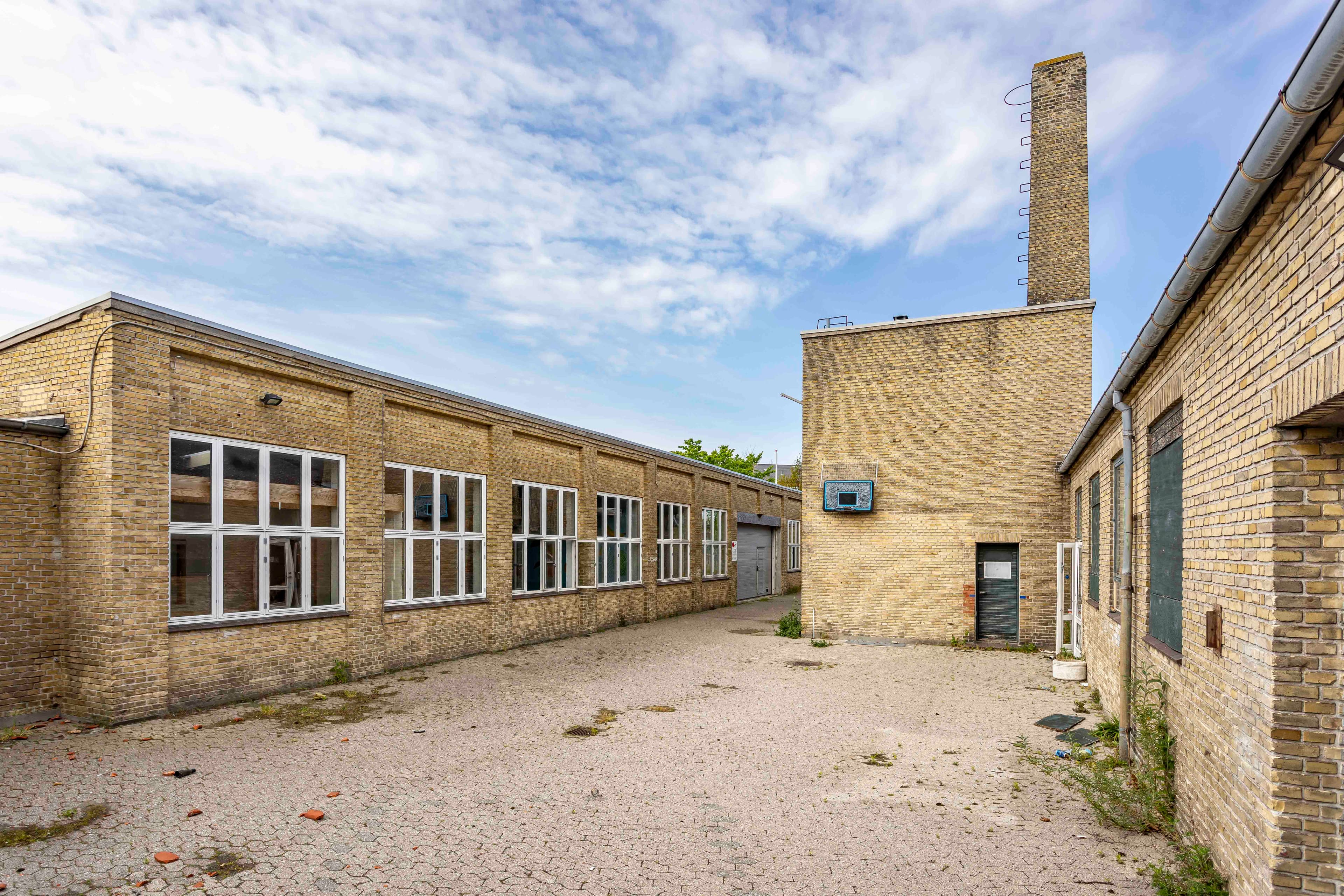
The bricks will be reused both in façades and paving across the area. The large quantity that can be reused after cleaning has positively surprised Mette Bang Pedersen:
“It is unusual to be able to reuse so many bricks in a single project. This is partly because many of the old buildings were constructed with both an outer and inner brick wall. At the same time, the bricks are very strong and set in a mortar that is relatively easy to remove. The old yellow bricks give the façades a vibrant and distinctive appearance and create a direct link back to the industrial history.”
Demolition of the existing buildings is expected to begin in the near future. Construction is scheduled to start in autumn 2026.